
Queer Cyborg Erotics: Abjection and Fluidity in Knights of Sidonia
sensual body horror as anti-normativity

Introduction
Tsutomu Nihei’s Knights of Sidonia manga (2009–2015) presents a dystopian vision of post-human survival, where the remnants of humanity aboard the seed ship Sidonia confront the dissolution of normative bodily and gendered boundaries. This paper argues that the manga’s depiction of queer cyborg bodies, particularly through the characters Izana Shinatose and Tsumugi Shiraui, offers a radical intervention into contemporary discourses on eroticism, transgression, and the sacred. Drawing on Georges Bataille’s Erotism: Death and Sensuality, Paul B. Preciado’s Testo Junkie and An Apartment on Uranus, and Legacy Russell’s Glitch Feminism, this analysis examines how Sidonia subverts heteronormative structures, embraces the monstrous, and reimagines kinship through the lens of abject eroticism.
Izana Shinatose: The Erotic Glitch of Relational Gender
Izana Shinatose, a third-gender character whose physiology adapts to their romantic partner’s sex, embodies Bataille’s concept of eroticism as a force that dissolves the boundaries of the self. For Bataille, eroticism is not merely about pleasure but about the transgression of the individual’s closed, discontinuous being, an experience that brings us to the edge of death and the sacred (Erotism 17). Izana’s body, capable of shifting between and beyond binary categories, enacts this transgression. Their existence aligns with Preciado’s “pharmacopornographic regime,” where gender and desire are not fixed but chemically, technologically, and relationally constructed (Testo Junkie 45). Izana’s adaptive transformations are not a return to normativity but a continual becoming, a glitch in the heteronormative matrix.
Their relationship with Nagate Tanikaze further complicates Bataille’s notion of eroticism as a “violent rupture” of the self (Erotism 23). Izana’s body does not conform to Nagate’s desires but responds to them, creating a dynamic where eroticism is not about domination but mutual dissolution. This reflects Bataille’s idea of love as a “sacred transgression,” where lovers become something other than themselves. It becomes a process that is both terrifying and ecstatic.
Tsumugi Shiraui: The Abject Sublime and the Erotics of the Monstrous
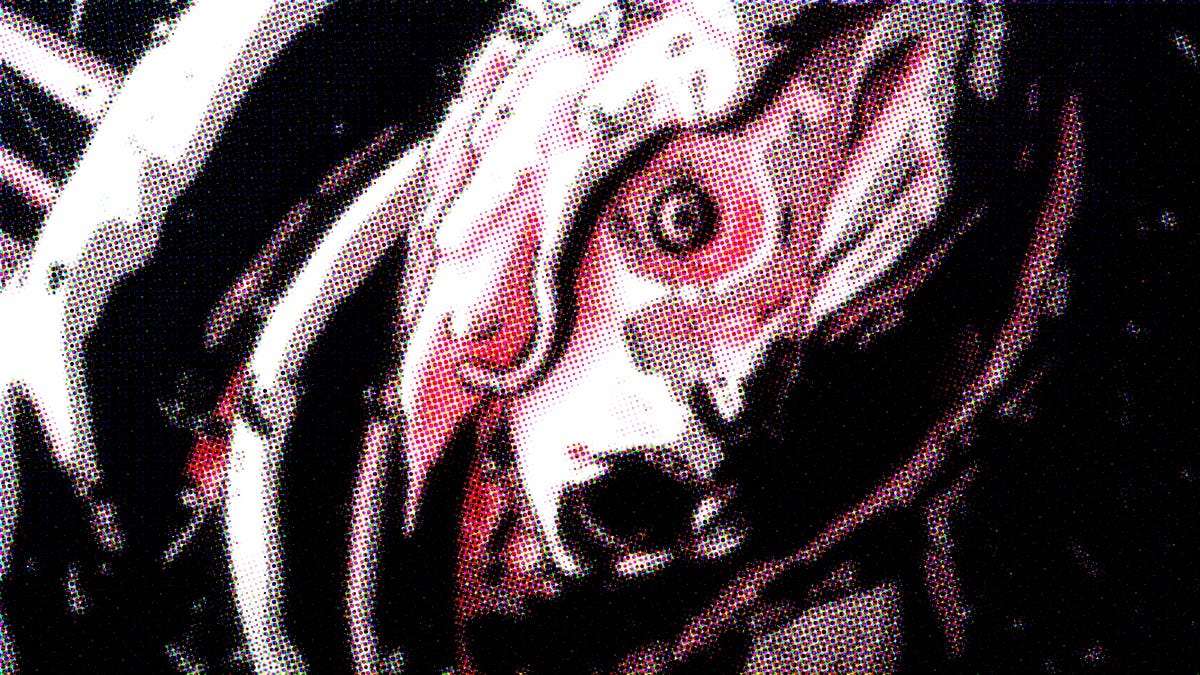
Tsumugi Shiraui, a human-Gauna hybrid, embodies Bataille’s “abject sublime”, a convergence of horror and fascination, repulsion and desire (Erotism 78). As a character who exists at the intersection of human and alien, Tsumugi’s form, which is part organic, part mechanical, entirely monstrous challenges the boundaries of the “human” and the “erotic.” Their body, which regenerates, mutates, and consumes, is not merely a horror but a site of queer possibility: a body that refuses the constraints of species, gender, or morality.
Bataille frames the monstrous as a necessary aspect of the sacred, a reminder of the continuity of all life in the face of death (Erotism 89). Tsumugi’s existence as a hybrid exemplifies this continuity. Their relationship with Nagate, marked by both violence and intimacy, reflects Bataille’s exploration of eroticism as a dance with dissolution. Tsumugi’s body is a living glitch, a site of transgression where the abject becomes the sublime, and the grotesque becomes the erotic.
This aligns with Legacy Russell’s Glitch Feminism, which embraces error as a tool for disruption. Russell argues that the “broken” body becomes a site of political and erotic potential (45). Tsumugi’s hybridity is not a flaw but a feature, a radical reimagining of what a body and desire can be.
Preciado, Xenofeminism, and the Techno-Organic Collective
The world of Sidonia is one where technology and biology are inseparable, and survival depends on the ability to adapt, mutate, and hybridize. This reflects both Preciado’s “counter-sexual revolution”(An Apartment on Uranus 112) and the xenofeminist manifesto’s call for a future where technology is leveraged to dismantle patriarchal and heteronormative structures. The manga’s society presents a vision where gender is fluid, reproduction is decoupled from binary sex, and kinship is redefined through technological and alien alliances.
Izana Shinatose and Tsumugi Shiraui embody the queer cyborg as techno-organic hybrids, their bodies blurring the boundaries between human, machine, and alien in ways that echo Donna Haraway’s Cyborg Manifesto and Paul B. Preciado’s somatic archive (Testo Junkie 98). Izana’s adaptive physiology, a fluid response to desire and context, mirrors Preciado’s pharmacopornographic body, where gender and identity are not fixed but dynamically inscribed by technology and politics, while Tsumugi’s regenerative, biomechanical hybridity embodies Bataille’s abject sublime (Erotism 78), a fusion of horror and eroticism that dissolves normative corporeality. In Knights of Sidonia, their bodies are not passive products of survival but active participants in reconfiguring humanity, continually negotiated through erotic, violent, and sacred acts that challenge the stability of identity itself.
Bataille, Glitch Feminism, and the Aesthetics of Disruption
Russell’s Glitch Feminism provides a framework for understanding how Sidonia uses the grotesque and the monstrous to disrupt normative beauty standards. Tsumugi’s hybrid form, with its tentacles, regenerative flesh, and mechanical augmentations, is a glitch in the human matrix: a body that refuses to conform (Russell 32). Similarly, Izana’s gender fluidity is a glitch in the heteronormative script, a reminder that identity is not a stable category but a process of becoming.
The manga’s aesthetic further emphasizes this disruption. The fusion of organic and synthetic elements in both characters and environments mirrors the glitch feminist embrace of the “error” as a tool for reimagining the body. In Sidonia, the abject is not something to be feared but a necessary condition for survival and evolution. Bataille’s sacred eroticism and Russell’s glitch feminism converge in the manga’s vision of a world where transgression is not just inevitable but generative.
Conclusion: Queer Futures in the Void
Knights of Sidonia offers a vision of queerness that is not just about identity but about survival, adaptation, and the embrace of the unknown. Through Izana and Tsumugi, the manga presents bodies that are fluid, hybrid, and resistant to normative frameworks. These characters embody Bataille’s sacred eroticism, Preciado’s counter-sexual revolution, and glitch feminism’s disruptive potential. They remind us that the body is not a prison but a canvas for endless becoming: a site where the abject, the erotic, and the sacred collide.
In a world where the human is already post-human, Sidonia invites us to imagine queer futures that are not bound by the limitations of the past. It is a future where the glitch is not an error but a feature, where the abject is not monstrous but a site of possibility, and where the body is not a fixed entity but a dynamic, erotic, and sacred process of transgression.
Works Cited
Bataille, Georges. Erotism: Death and Sensuality. Translated by Mary Dalwood, City Lights Books, 1986.
Haraway, Donna. Simians, Cyborgs, and Women: The Reinvention of Nature. Routledge, 1991.
Preciado, Paul B. An Apartment on Uranus: Chronicles of the Crossing. Semiotext(e), 2020.
Preciado, Paul B. Testo Junkie: Sex, Drugs, and Biopolitics in the Pharmacopornographic Era. The Feminist Press at CUNY, 2013.
Russell, Legacy. Glitch Feminism: A Manifesto. Verso, 2020.
“Post-Gendered Bodies and Relational Gender in Knights of Sidonia.” Journal of Finfar, 10 Sept. 2019, journal.finfar.org/articles/post-gendered-bodies-and-relational-gender-in-knights-of-sidonia/. Accessed 28 Jan. 2026.